What your mouth says about the rest of your health
A little pink in the sink is the only bleeding most people treat as normal. Here is what it actually means, what the research does and does not show about gums and general health, and why the honest version of that story is smaller and more useful.

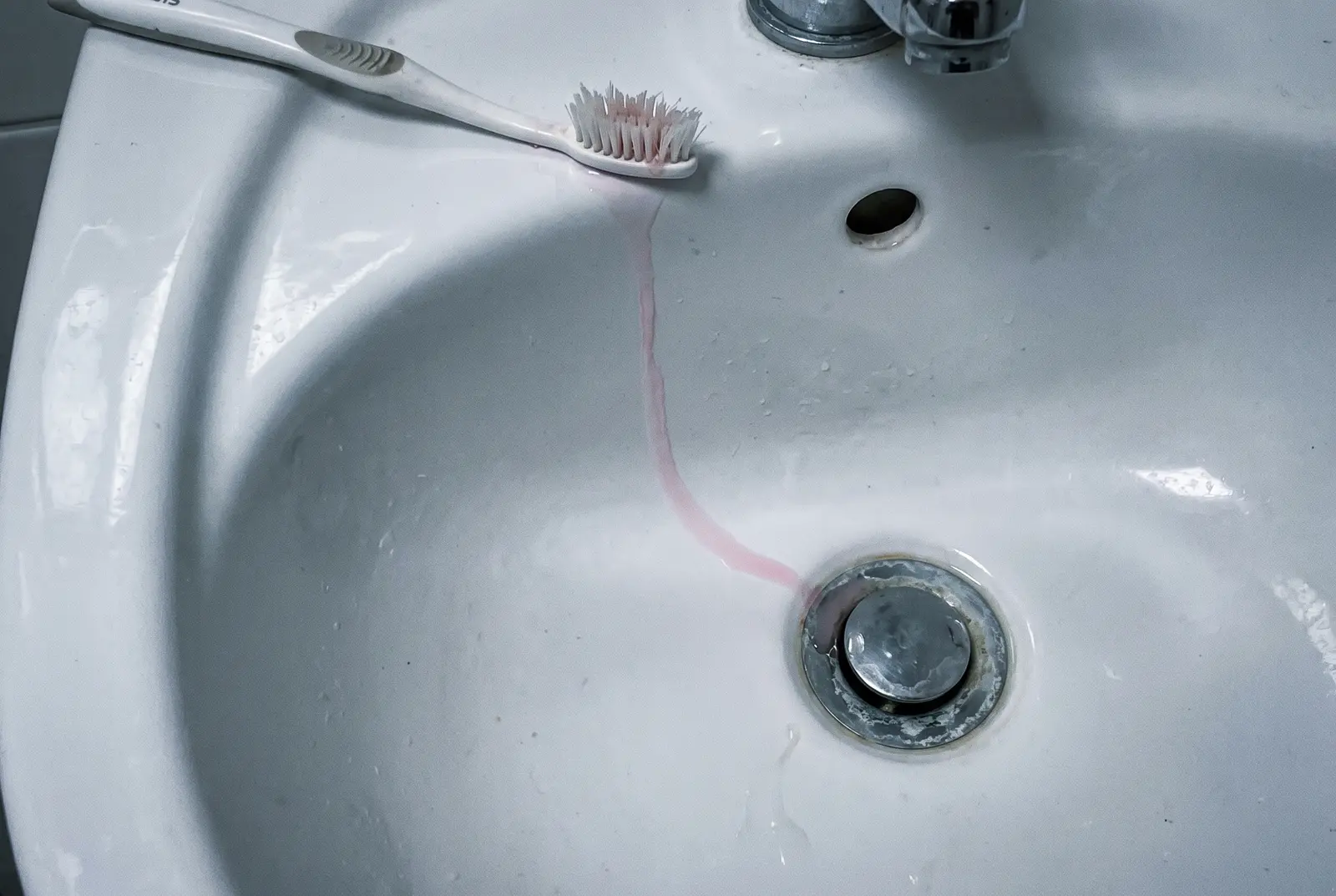
A little pink in the sink when you brush.
Almost everybody has seen it, and almost everybody does the same thing with it. Rinse, look away, decide you brushed too hard, and carry on.
Here is the thing worth knowing. That is the only place in your body where you would treat bleeding as normal. If your hand bled every time you washed it, you would not shrug.
Your mouth is not sealed off from the rest of you
We talk about teeth as if they are objects, like fingernails. Things you maintain.
They are not. They sit in living bone, in living gum, wired into blood supply and nerve, in the warmest and busiest part of your body. Whatever is happening in there is happening inside you, not on you.
That is the reframe this whole article rests on, and it changes what a dental visit is for. Somebody is looking inside a part of your body that nobody else looks at, twice a year, with a light.
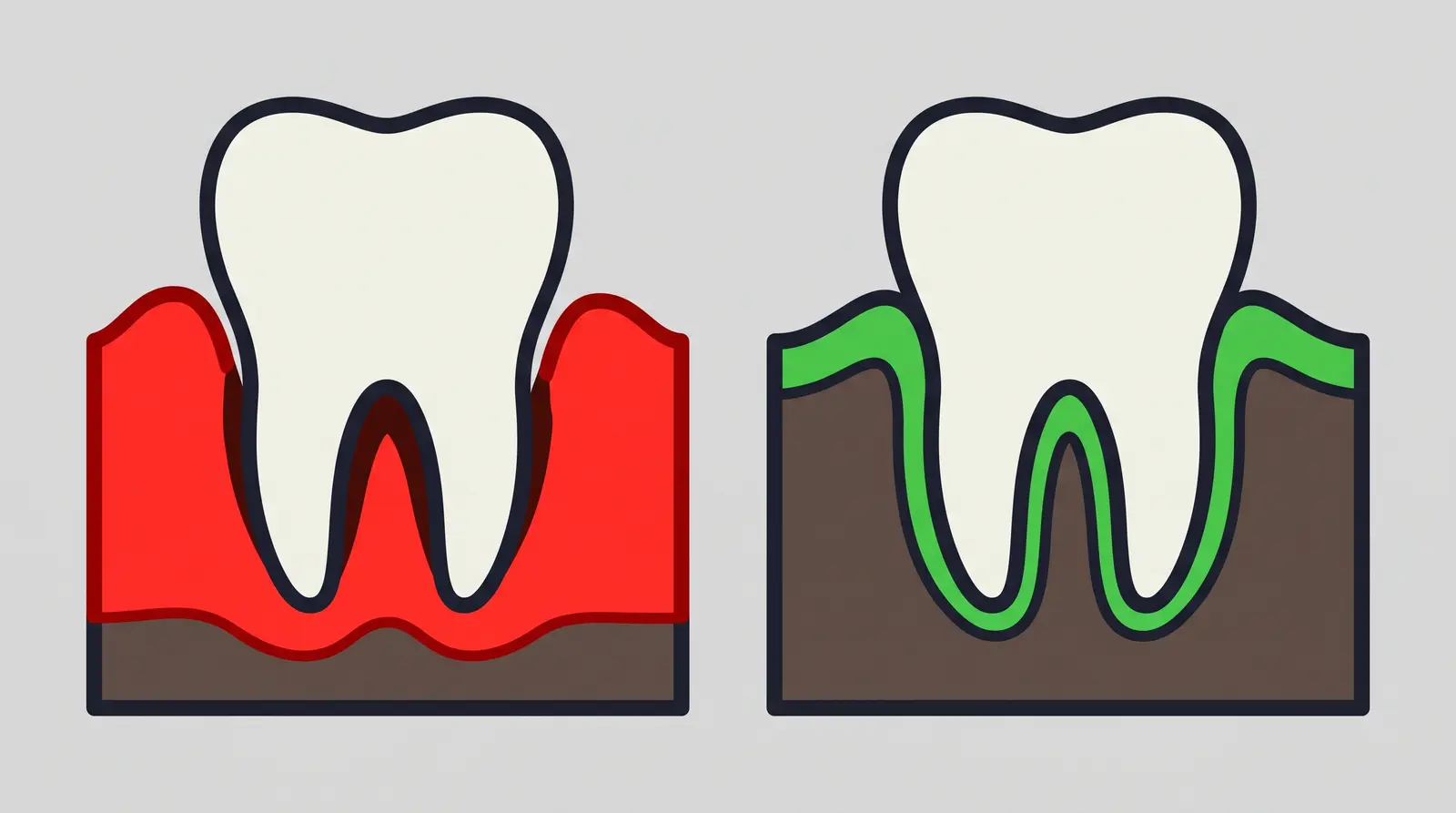
What is actually going on when gums bleed
Plaque builds up where a toothbrush misses, especially along and just under the gum line.
The gums get inflamed. Inflamed tissue bleeds when you touch it, which is what the pink in the sink is. Then the gum starts to pull away from the tooth, opening a small space that a brush cannot reach at all. Down in that space, the disease quietly works at the bone and the fibres that hold your teeth in place.
That is gum disease, and it is the leading cause of tooth loss in adults. More than decay.
The reason it gets missed
There is usually no pain.
Not until teeth start to feel loose, which is very late in the story. Decay eventually hurts and sends you to a dentist. Gum disease mostly does not. It just quietly removes the foundation, and the first obvious symptom arrives after the damage that caused it.
So the tell is not pain. The tell is the sink.
Quick check
Any of these is worth mentioning at your next visit.
- Pink in the sink, or on the floss, more than occasionally
- Gums that look puffy or shiny, or that have gone darker at the edge
- Teeth that look longer than they used to, because the gum has receded
- Persistent bad breath that brushing does not fix
- A tooth that feels slightly mobile, or a bite that feels like it has shifted
- Waking with a sore jaw, or being told you grind in your sleep
- Snoring, or waking unrefreshed after a full night
The last two are on the list for a reason. Grinding and sleep-disordered breathing both show up in the mouth first, and a dentist is often the first person to spot either one.
Now the honest part, because this is where health writing usually cheats
You will have seen headlines linking gum health to heart disease, to diabetes, to other conditions. Healthy gums are linked to better general health, and that is a real finding, repeated in a lot of research.
But here is what most articles will not tell you plainly.
A link is not a cause. Two things can travel together for several reasons. One can cause the other. The other can cause the one. Or something else can sit underneath and cause both. Inflammation, smoking, diet, and how much money and time somebody has for health care all move gum disease and general health in the same direction at once.
Nobody can honestly tell you that a clean will protect your heart. Anyone who does is going further than the evidence goes, and you should trust everything else they say a bit less.
So why raise it at all? Because the useful version of this is smaller and much more solid.
Chronic inflammation in your gums is a real, ongoing, treatable inflammation in your body. It has its own definite cost, which is your teeth. It is one of the few chronic conditions that can be found early, treated straightforwardly, and largely reversed in its early stage.
That case stands on its own. It does not need a heart attack attached to it.
What actually helps
The plan is not exciting, which is usually a good sign.
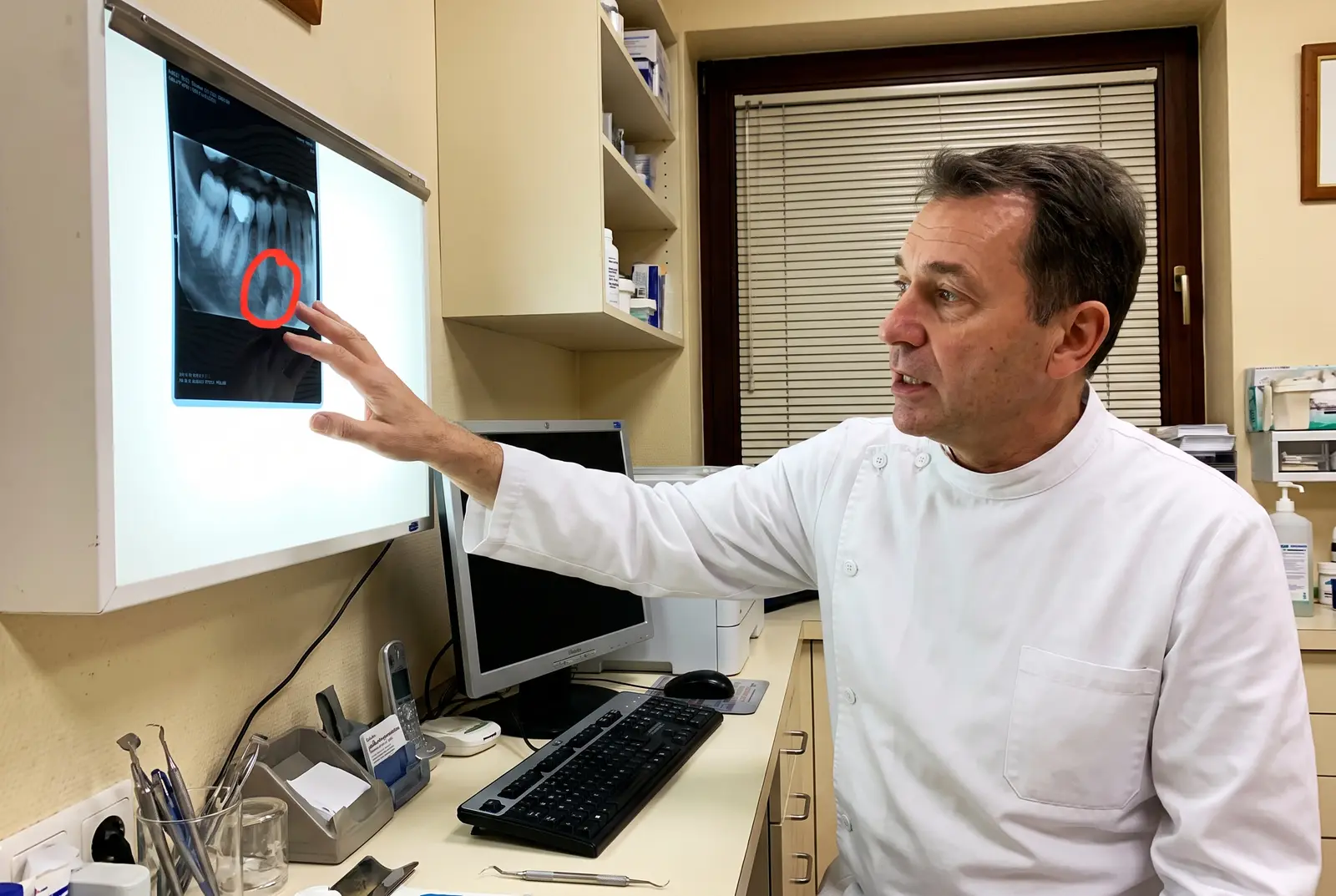
Get it looked at, and measured. Gums are checked and measured, along with the bone around the teeth, so you find out where things actually stand rather than guessing from the sink.
A proper clean. The hardened build-up a toothbrush cannot shift is removed, including below the gum line where the trouble starts.
Deeper treatment if it has gone further. For more advanced gums there are deeper cleaning treatments to settle the inflammation and protect the bone you still have. The area is numbed. It is more comfortable than people expect.
A rhythm that suits your gums. Many people do well with a clean every six months. If your gums need more attention for a while, that is a different rhythm, not a failure.
Caught early, gingivitis can usually be reversed. Further along, gum disease can be controlled and stopped from getting worse, which protects what you still have. The sooner you look, the more you keep.
The bottom line
You do not need to believe anything dramatic about your mouth and your health.
You only need to accept one unremarkable thing: bleeding tissue is inflamed tissue, inflamed tissue is worth treating, and this particular tissue is holding your teeth in.
A full check-up and clean is a fixed $249, which covers the exam, the scale and clean, fluoride and any bitewing x-rays you need. We claim your health fund on the spot, and many funds cover it in full.
Go and find out where your gums stand. That is the entire ask.
Read more: Gum disease, and what treating it involves
Gum health FAQ
My gums bleed when I brush. Is that bad?
It is the earliest sign of gum disease and worth acting on, but caught early it is very treatable. Bleeding usually means the gums are inflamed from build-up a toothbrush cannot fully remove. A professional clean and good home care often turns it around.
Does gum disease really cause heart disease?
That is not what the research shows, and we will not tell you it does. Gum health and general health are linked, which means they travel together. A link can run either direction, or come from something underneath both, like smoking or long-term inflammation. The reliable reason to treat your gums is that gum disease costs you teeth.
Can gum disease be reversed?
The early stage, gingivitis, can usually be reversed with a clean and good home care. More advanced gum disease can be controlled and stopped from getting worse, which protects the teeth and bone you still have. The sooner you act, the more you keep.
Does deeper gum treatment hurt?
A standard scale and clean is comfortable for most people. For deeper cleaning of more advanced gums we numb the area so you stay comfortable, and we go gently.
How often should I have a clean?
Many people do well every six months, but if your gums need more attention we may suggest more often for a while. We will recommend a rhythm that suits you rather than a one-size rule.


