How to clean dentures without damaging them
A daily cleaning routine for false teeth, what to avoid, and when deposits, soreness or a loose fit need a dental appointment.
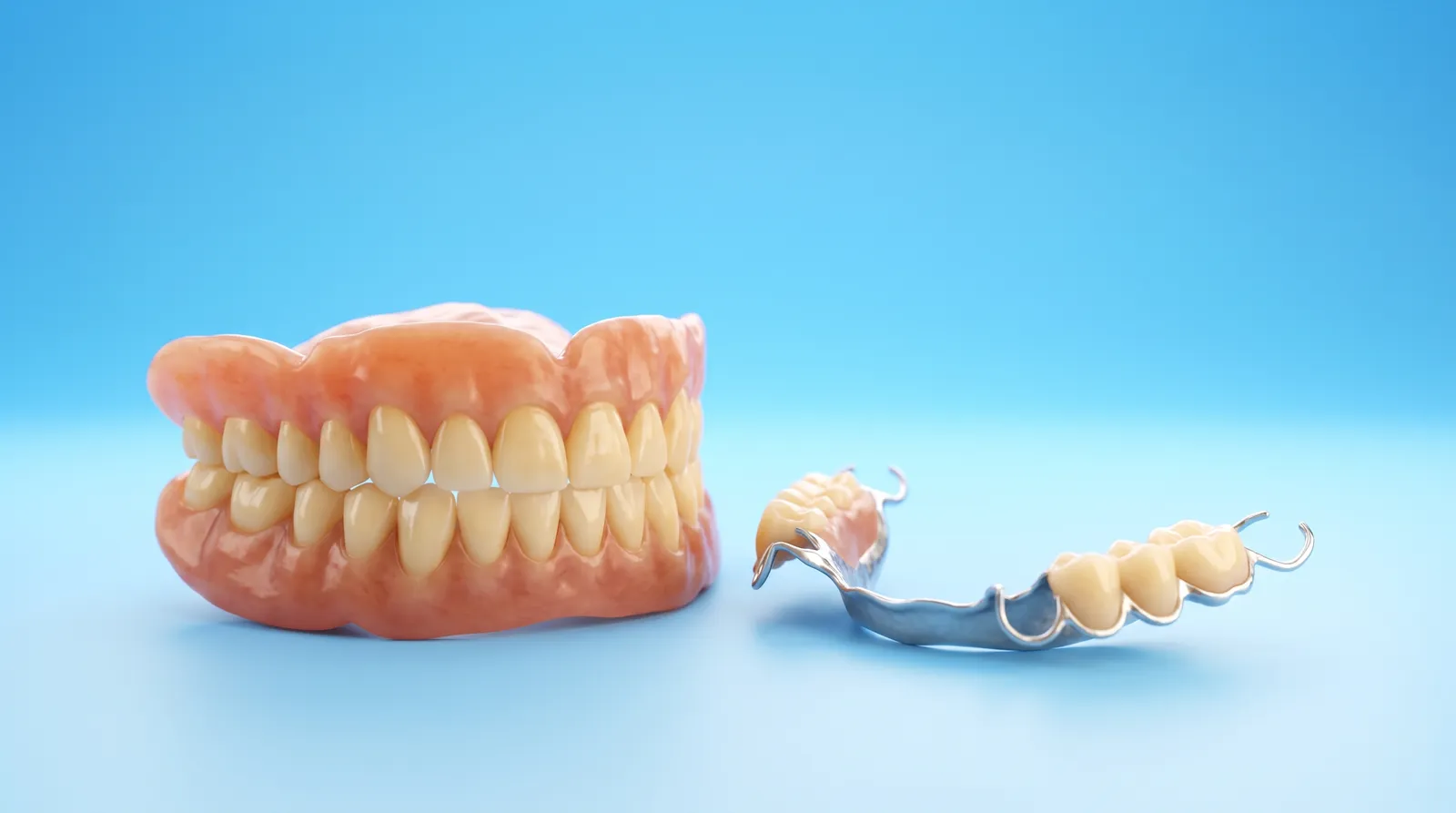
If your false teeth feel coated or smell unpleasant, stronger scrubbing is not automatically the answer. A denture needs cleaning, but the material also needs protection. Scratches and heat damage can leave you with another problem to fix.
A practical daily routine
- Protect against drops. Clean over a towel or a basin containing water.
- Remove and rinse. Take the denture out and rinse away loose food after meals.
- Brush gently. Use a soft denture brush or soft toothbrush with mild soap and water. Clean the surfaces that sit against the gums as well as the visible teeth, then rinse thoroughly.
- Choose a compatible soak. Follow the product instructions and your dentist’s advice for your denture’s materials. Do not assume a solution suitable for one appliance is safe for another.
- Clean your mouth too. Keep remaining teeth and the surrounding tissues clean; removing the denture lets you reach them.
Cambridge University Hospitals’ denture-care guide recommends gentle brushing, avoiding hot water and abrasive toothpaste, and protecting dentures from being dropped.
Should dentures come out at night?
Usually, yes, unless your dentist gives you different instructions. Ask how to store your particular denture and what to do if it has a soft lining or metal components. The NHS denture guide advises removing dentures overnight and continuing regular dental checks. Follow specific instructions for a newly fitted immediate denture after extractions.
Hard deposits, stains and “instant tartar removal”
When a deposit does not come away with the recommended cleaning routine, make an appointment to identify it and discuss safe cleaning. Do not treat a search result promising instant removal as instructions for your appliance. Bring the denture and the cleaning product you use so the team can assess both.
A cleaning appointment and a repair appointment solve different problems. If a tooth or clasp has broken, see our denture repair and reline guide. Do not use household glue or reshape the denture yourself.
Cleaning cannot correct a poor fit
Arrange a review if the denture slips, clicks, hurts or is visibly damaged. Redness, bleeding gums and persistent bad breath also warrant assessment. Dentures and the mouth change over time; an examination helps determine whether cleaning, adjustment, repair or replacement is appropriate. NHS guidance lists these reasons to see a dentist.
Make the appointment useful
Tell the clinic whether you need help with cleaning, a loose fit, soreness or breakage. Bring your denture and any pieces, and explain when the problem began. Ask for the proposed work and fees before treatment; this article does not promise a free repair or same-day laboratory turnaround.
Call Enhanced Dental Studios on 1800 833 844 during clinic hours to arrange an assessment and confirm the appropriate location. You can read about our denture service before your visit.


